http://www.substack.com/@annelyzethat
See you there 🙂
http://www.substack.com/@annelyzethat
See you there 🙂
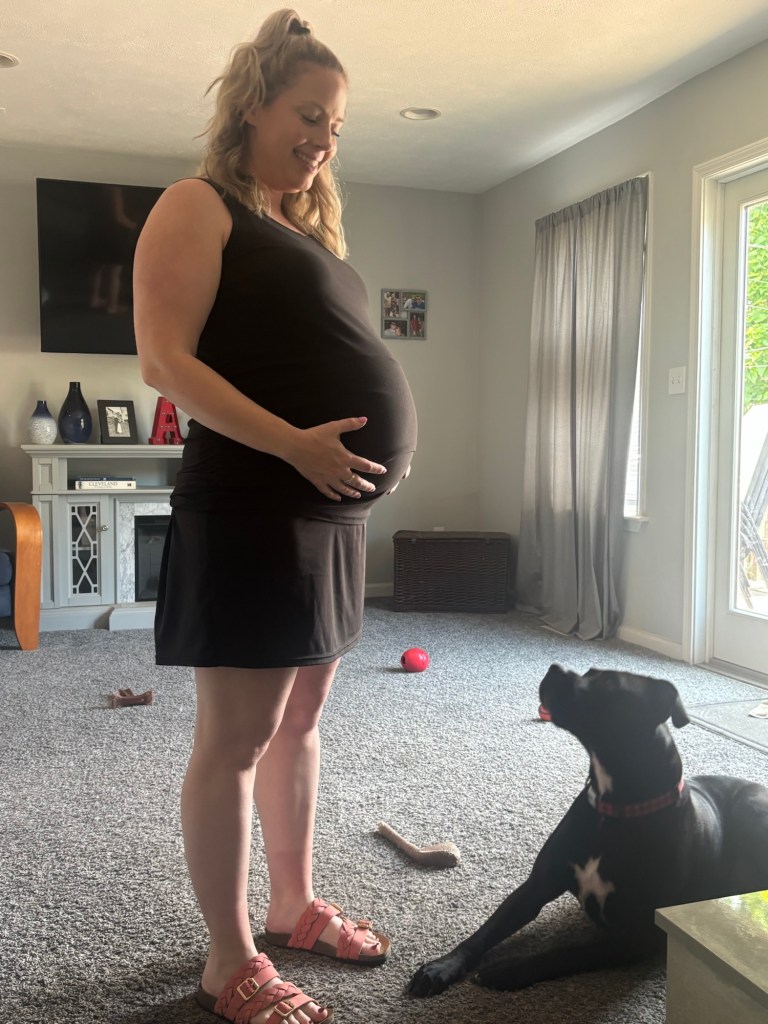
I loved my pregnant body. I loved watching it expand every week, I loved my belly, I LOVED eating, and I even felt proud to watch the numbers go up on the scale at each prenatal visit. If I read that sentence in my early 20s, in the depths of my restriction and low body image, I wouldn’t have believed that statement had come from me. But it’s true. I dare to say that my body image has never been more healthy than it was when I was pregnant.
I think a contributing factor to my healthy body image was that I had such a positive experience with pregnancy overall. I didn’t have many adverse symptoms or complications, and I felt surprisingly good throughout the process. Prior to this pregnancy, I did have a miscarriage that devastated me. In some ways, that made me even more grateful for every day of my successful pregnancy. It can be easy to love your body when you are actually creating life every day.
Weight gain during pregnancy signals that everything is progressing the way that it should be. It signals that the fetus is gaining the weight necessary to become a viable and adorable cutie in the outside world, and that you are cultivating the best environment for them to do so. Not gaining weight most often means that something is wrong. Allowing myself to gain weight without any guilt felt like freedom.
I started writing this post simply to share my experience of having a positive body image during pregnancy, but as I started typing, this idea dawned on me: Pregnancy is maybe the only time in life that women are given permission to expand and take up space. What about the every day miracle of our bodies carrying us through life? What if we allowed ourselves this type of freedom all the time? What if we took up space and gave into our cravings without guilt? What if we always trusted that our bodies were changing in ways that are healthiest for us? What lessons can we learn from our beautiful, growing, stretch marked pregnant bodies?
I devoured Judy Blume books as a child. I can’t remember exactly how many of her books that I’ve read, but looking at the list, I’m guessing 14. From that number alone, I would consider her to be one of the most prolific authors of my adolescence. Blume’s books are known to tackle real subjects that tweens face, such as navigating friendships, puberty, bullying, body changes, and more. Several of her books have been mainstays on banned lists for decades, because she writes about (important) topics such as menstruation, masturbation, body image, birth control, and sex.
I don’t remember the specifics of many of the books that I’ve read, but I do remember reading “Are you There God? It’s Me, Margaret.” When the movie adaptation was released in 2023, my mom and I saw it in theaters. I recently decided to revisit both. I think the book holds up as a beautiful coming-of-age story for adolescent girls, and the movie does a wonderful job of staying true to the book. I think either medium would be a great tool for any 10-14ish year-old, especially one that will be experiencing menstruation, buying a bra for the first time, and other experiences of puberty. I’m not going to use the rest of this post as a review or a summary, but more so as a reflection of some of the aspects of the overall story and how the movie portrayed the plot point.
The Puberty of it all: One of the major themes throughout the book, and one of the main reasons why I think it’s such an important read for young people, is Margaret’s journey into puberty. Buying a bra, praying and chanting for chest growth (who could forget “We must, we must, we must increase our bust!”), waiting for the first menstrual cycle, buying deodorant… I had forgotten just how BIG all of these moments felt, but this book and movie transport me right back. Blume and the filmmakers are able to portray these moments in a sensitive and honest way. Puberty is confusing, scary, and stigmatized (see: book bans) and I believe this story can help tweens feel seen and less alone.
Religion: The other major plot line running through the book is Margaret’s grappling with religiosity. With a Jewish dad and a Christian mom who was disowned by her parents due to marrying someone Jewish, Margaret’s parents have decided to raise Margaret without a religious tradition. Throughout the book, Margaret prays to God (she thinks, maybe), sometimes hilariously, like when praying for her chest to grow, and often tenderly. She spends the book exploring faiths, looking for God in different church services, but only ever feeling God when she is alone. Something I love about this storyline is that it doesn’t end wrapped in a bow. At the end of the book, Margaret remains confused about religion. She even abandons talking to God at one point, finding her way back by the end.
Changing bodies: There’s a character in the story named Laura Danker who has developed at a younger age than the rest of the girls in Margaret’s class, and is taller than all of the boys. Rumors circulate around Laura that she is much more sexually experienced than the rest of the girls, and she is bullied and picked on by her classmates. I did not remember this storyline and was pleased by its inclusion and nuance. Sexualization of girls and women is a huge problem in our society, and many women can remember the first time they were sexually harassed, often in their young teens. I think Blume was able to touch on this subject in an age-appropriate manner, while also reminding girls that it can be hard to be the one that goes through puberty first.
Other things about the movie specifically that I loved: I enjoyed both my reread and rewatch of the movie, but the movie especially feels like a warm hug. It brought the book to life so beautifully, and felt both timeless and nostalgic. Here are some random things that I appreciated about the movie:
This reread and rewatch were a delight for me, and I think stories like Margaret are immensely important for young people to have at their disposal.
2025 is not going to be known for being a body positive, or even a body neutral year. In many ways, it feels like our body ideals and cultural attitudes around food, bodies, and exercise are time traveling back toward the early 2000s. Diet culture is alive and thriving, and we need tools at our disposal to help combat all of the harmful messaging that diet culture engrains in us. Enter Alex Light’s You are Not a Before Picture: How to Finally Make Peace With Your Body, for Good.
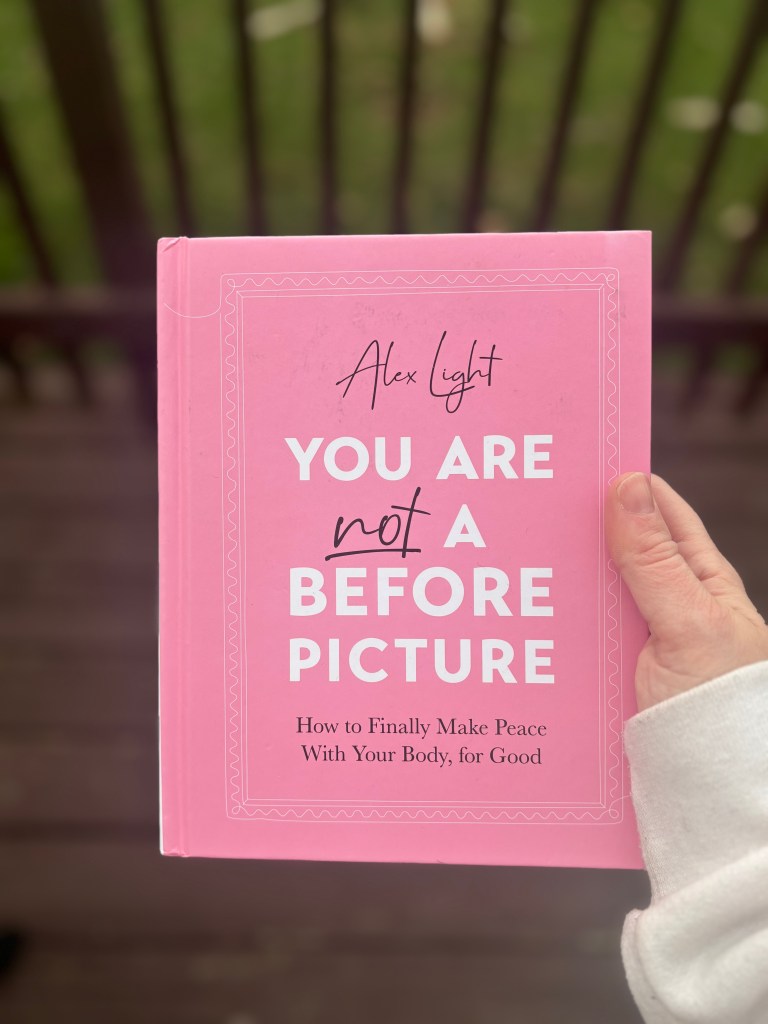
Light describes this book as a “body image bible,” and I tend to agree, as it is an expertly researched encyclopedia of all things body image: a history of diets, what happens to our bodies when we diet (spoiler: diets don’t work), beauty trends, the impact of the media, fitness, weight gain, and more. It really is a comprehensive guide to all things body image-related. As someone who is well-versed in body image, but hasn’t been able to immerse myself in the literature as much as I would like in the last few years, it was a great re-introduction to the genre. For someone struggling with body image, or just starting to learn about diet culture, this serves as a great primer.
I found each chapter of this book to be well-researched, and I think that I will be returning to it over and over again, for both personal and professional purposes. My copy is already well-highlighted. One of my favorite chapters was about the history of diets, from the first-known diet book in the 1500s, to the weight-loss apps of the mid-2010s (this book was first published in 2022, so right before the Ozempic boom). Through learning about the ever-changing diet advice and beauty standards, it is clear that diets have always been a way to uphold the patriarchy.
Something I really appreciated about this book is Light’s acknowledgment of her identity and privilege and a straight-sized, cis white woman. Throughout the book, she interviews women in marginalized bodies to help us all gain a better understanding of the systems of oppression that help to maintain diet culture. She shares how misogyny, racism, homophobia and transphobia, and capitalism all contribute to the dangerous beauty standard that we all are pressured to adhere to. Light explains that body positivity has its roots in the radical political movement of fat acceptance, which was created for and by women of color. As described in the book, the body positivity movement has transformed into a place “dominated by privileged bodies” and commodified by content creators and brands. To that point, I often find this reality is often missing from the discourse by body image experts with Light’s (and my) privileges, so I was pleased with that portion of the book.
I could write an essay on each of the chapters of this book, and as stated previously, I will go back time and time again as I do delve deeper into specific topics. Throughout the book, Light also weaves her own experiences with an eating disorder and body image struggles, and I am grateful for her vulnerability. She is also a great follow on instagram (@alexlight_ldn). This book belongs in every body image collection.
8/3/21
Stay soft
The world hardens you
They tell us to keep our emotions inside
But can’t you see
Inside of me is a swirl of blue, red, pink, green, yellow
Sad angry happy jealous grieving sharing loving
They give the world color
I set them free and they encircle the air
Enveloping trees and buildings and people,
mixing with others’ greens and blues and reds.
Stay soft
They say that I am me and he is he
But don’t you see that he is we?
The man begging on the street corner is me
His colors are on full display
His blues are spilling onto the sidewalk
Can’t you feel them on your toes?
Don’t look away now
I reach inside of me
I give him some of my yellow
We are both a little more green
But we are soft and full of color
Alive and real.
By Guest Blogger Dave Peters
Some reflections on the baking of sourdough bread… a spiritual experience (damn, that sounds cheesy!)
My bread bias
I rather imagine that all bread prior to the commercialization of yeast in the late 19th century was some form of sourdough bread – bread in the traditional Eurocentric understanding of bread – bread that is some rectangular or oval chunk of cooked flour with lots of little air holes in it. Just bread, man! The term “sourdough” in modern parlance has made the simple millenia-old baking method assume some mystical spiritual aura which, beyond the fact that it is a method for making good bread, it does not deserve because… it is simple, fundamental, and has been an unassuming part of human history for the last 7000 years. On the other hand, real homemade sourdough bread compared with store-bought crap bread (yes, even the vaunted Ezekiel Bread) can be a mystical spiritual experience for the unbaptised. There are some other biases I have that I should share: bread makers are sinful and suck, commercial yeasts are boring and suck, bread pans are lazy and suck, and commercial breads are boring, tasteless, and suck.
What is bread
Some form of milled grain – flour, salt (kosher please), water – even Lake Erie tap water works- and something to make it rise: yeast, which is a natural active fungus. That is all. Oh, and an oven to bake the bread – about 425F in my recipes.
Some background
We all have some relationship to bread in the Western Culture. We might have once been sculpting objects out of gummy spongy Wonder Bread. At church we may have been struck by the phrase, give us this day our daily bread.” (hey, Jesus is talking about Wonder Bread, WTH?) When I was a kid in the 1960s, my mother would occasionally bake these chunks of wholewheat bread – the smells were hypnotic and the bread was like nothing ever tasted in my young experience. I even replicated this bread business in high school – mostly just to make good pizza. But always this fascination with the chemistry of yeast. To walk into a bakery in Europe is resurrection – minus the hallelujah chorus – just a bunch of Germans complaining about prices. But truly well-made homemade bread offers me connections with something spiritual and offers me grace.
To share
Make your own sourdough starter. It is easy. But it is not quick; nothing gratifying ever is. It can be a 3-5 day process, but in the later phases of the development (and I might add on the days you revive your sourdough starter for baking), you become a spectator of the creation of life – ok it is a fungus, but I find myself getting lost watching the stuff slowly bubble and grow. Without intending to, my breathing has slowed, my mind has cleared and for stretches there is a spiritual connection – ok, again, it is a fungus, but it is cool. Spend 5 minutes and just watch. Additionally, that yeast you have created is unique to your environment – those are your microbes, baby! Even if your relative in San Francisco sends you sourdough starter or you overpay for some starter from, say, Tuscany, within a matter of 3-4 feedings, your starter will be unique to your environment. My starter is unique to my house in Avon Lake, Ohio and no other starter will act and taste like mine.
And then this business – Discouraging those seeking instant gratification, the preparation of the dough is a two day process – and screw the bread maker and commercial yeasts, because this is worth it! That little packet of Fleisman’s or Red Star with their turbocharged monoculture fungus may cut the process by 90%, but it makes boring bread. If you are new to the sourdough process, there will be slow surprises. If you are an old hand, you know that preparing the dough comes in phases that demand patience and… wait for it… humility. No possible chance for ego because I am not in charge. My yeast is in charge.
And then there is this business – at some point the dough must be kneaded (forget the folding method!). I could pay top dollar and go to my local ashram to meditate, recharge, and get in touch with my inner so-and-so, or… I could knead bread. A bit of a learned skill – it just takes some repetition – but when I knead dough, without even realizing it, there is a rhythm to my motions and breathing and serenity just happens.
It is alive
There are generally 2 periods for the dough to rise before it can be thrown in the oven. It is like the biblical definition of love – as opposed to that volcanic explosion that every child loves when mixing baking soda with vinegar. The dough is alive – it grows but not as a resounding gong or a clanging cymbal. The dough grows – it is alive with patience and kindness – you have been kind to all the ingredients. You have created this, given life to this and in some way, the process (not the finished loaf – the process) has given something back to you: humility, serenity and grace. And week after week I marvel as the billions of yeast beings triple the size of my loaves, yet the yeast never boasts.
Baking. There are strange reasons why this is not my favorite part, although the aroma is orgasmic. Too many rules. 425F for 35 minutes. Cool on a rack for 30 minutes. But again, amazing things happen. Initially, the heat excites the yeast into one more burst of chemistry, some of the moisture makes a jailbreak and cracks out of the top and the outer shell turns to an autumn crust, a crust like you have never enjoyed before. And sadly, the 425F has killed your yeast – and it is your yeast, but… you have saved some of your sourdough starter, fed it a bit and tucked it away at that special little alter in your fridge all ready to be reawakened next Tuesday.
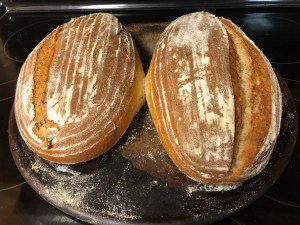
The Bread. Lots of songs in the hymnal about bread (in mercy broken). Other than the original 1st communion in the upper room, your fresh loaf is it. Transubstantiation of whatever sort you wish, but that bread will fill your soul. Connection with all the senses – go on, touch it, listen to the crust when you cut it, can’t help but smell it, look closely at the little holes and taste it – no butter (yet)! Connection with a creative force (an omnipotent being may or may not have created the yeast but you did.). The humility to know you were nothing more than the mixer of ageless nature. Serenity of a patient process. Gratitude for what nature has given us. Birth. Nourishment. Grace. Sourdough bread.
For any other sourdough-related questions or discussions, feel free to contact Dave at herrpetro@gmail.com
My greatest passion- that *thing* that lights my soul on fire, is body image education. This weekend I was able to add kindling to that fire with two experiences. On Friday I was privileged enough to be a guest on my friend Tiffany Baker’s IGTV show- check out our Instagram Live here. We had a great conversation around self-compassion, finding balance in health, and raising kids in a world where the media still so often portrays one beauty narrative. During our conversation, I discussed a few activities that I do when I work with youth on these topics. This morning I facilitated a body image and media literacy workshop to the 8th grade Confirmation class at my local church. Facilitating these workshops is something that truly brings me joy, and I’ve been privileged enough to lead them for both youth and parents. I cover a lot of material during these presentations, and I am not going to go through everything I do, but I wanted to share an overview of what I do, and a couple of takeaways or skills that I hope to share during these workshops:
Body Image and Eating Disorders
Focus/takeaway: Definitions and statistics; how societal factors can influence health
I usually start by presenting to the youth facts and definitions about body image and eating disorders. I share some statistics about the prevalence of eating disorders, especially among teens, and the mortality rates. I briefly touch on specific eating disorders, and then we define what body image is and what outside factors could impact the way someone sees themselves.
Idealized Body Types and Media Literacy
Focus/takeaway: the ability to critically analyze media !
I lead the youth through a brainstorm activity in which we discuss the “ideal” body type portrayed in the media for both men and women. We talk about and I provide visual examples of whitewashing (in which Black people and people of color are photoshopped to have lighter skin), photoshop, and filters. I then introduce my favorite part of the workshop which is an ad analysis activity. The kids break off into groups and are given an ad and a set of questions to discuss. They’re usually the most talkative during and following this activity. We talk about the importance of being able to critically analyze media. I hope that I am providing them with the tools to understand that images in the media aren’t necessarily real, they aren’t healthy to attain, and the beginning understandings of the race and gender politics of it all.
Objectification and Representation
Focus/takeaway: recognizing objectification in the media and the importance of representation
I like to share examples of objectification of bodies in the media and introduce the concept of self-objectification. Depending on the age of the group, I might explain how objectification is related to violence against women. I usually share a trailer or clip from the film “Misrepresentation” and we discuss the importance of representation and diversity in front of and behind the camera- size, ability, gender, race, diversity.
As I said, this is such a broad topic that I could do a workshop on so many individual aspects of it all. My hope is that if youth get one thing out of it, it is that they can critically analyze the media and understand that there is no need to change anything about the way that they look, or who they are.
9/6/20
Sometimes when i’m feeling joy
I get sad
A knot rises in my stomach and darkens the sun
I know what it is
A familiar foe
You probably know it too
Anxiety
Sometimes active, sometimes dormant,
It’s always there
Waiting to complicate a pure moment
I’m laughing with my partner and suddenly
(the good doesn’t last you know)
Anxiety whispers into my heart
I’m sharing an intimate moment with my family
(yes but think about the pain of the past)
It tries to draw me away from now
From love
From light
From truth
It lies.
You are pure light
You are the sun and the moon
The whole galaxy swims inside of you (and you)
You are a burst of golden light
You are not your anxiety
(And I am not mine)
It lies
It lies
I wrote this post several months ago, but am publishing it now:
If there’s one thing that gets people excited about movies, it’s menstruation, am I right?? Okay, maybe that’s wishful thinking, but I DO hope that after reading this post, I have motivated you to watch “Period. End of Sentence,” streaming now on Netflix. This short film won an Academy award in 2018, among other accolades, including an award at the Cleveland Film Fest. I’m very proud to say that my grandfather is the person who first told me about the movie, and I finally watched it, knowing it would be perfect for this month!
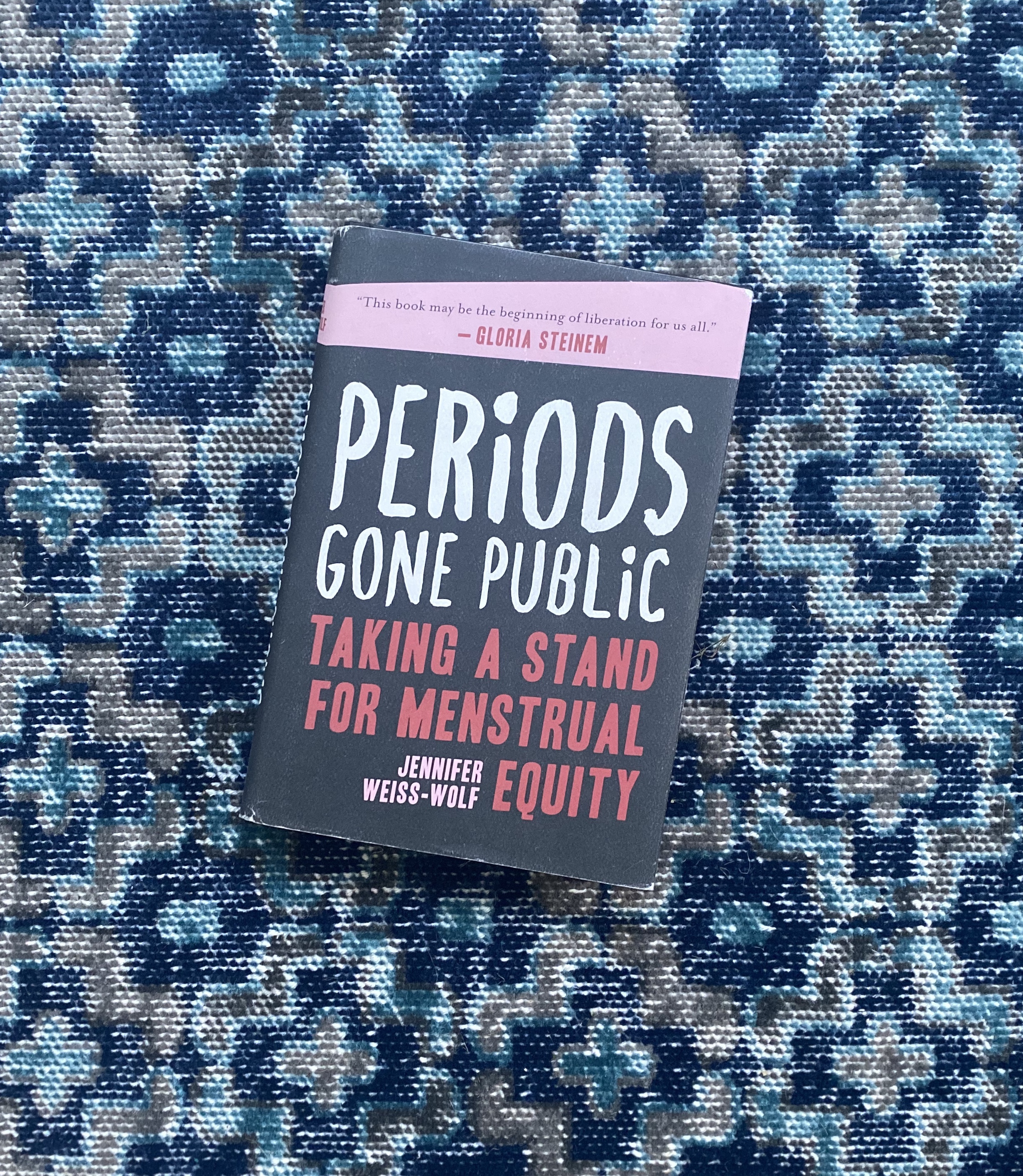
The film, directed by Rayka Zehtabchi, follows a local group of women in Hapur, India, as they learn how to operate a machine that makes low-cost and biodegradable sanitary pads which they sell to women at a low cost. This helps to improve hygiene and health as well as begins to shed the strong taboos and stigma in India surrounding menstruation. I knew of this phenomenon from the book “Periods Gone Public,” (which I discuss HERE) when author Jennifer Weiss-Wolf goes into extensive detail. Arunachalam Murugananthan, now a high-profile name in this work, is the creator of “the world’s foremost micro enterprise model: a manufacturing device and process for producing low-cost, locally made pads.” (Pg. 33). Period. End of Sentence shows Murugananthan demonstrating the use of his machine to the women in Hapur, who are then off and running. They start producing, using, and selling their sanitary pads. It’s cool to see a visual representation of what I read about.
Here are some other observations and what I learned from the film:
We know that stigma can lead to serious, harmful consequences. In “Periods Gone Public,” Weiss-Wolf writes that of 355 million people who menstruate in India, only 12 percent use any sanitary products at all (pg. 29), and goes on to say this:
“Entrenched stigma marginalizes menstruation and exacerbates the conditions of poverty, not only undermining the health and endangering the safety and lives of women and girls, but also curtailing their opportunities. This is, effectively, a denial of their equal chance to obtain an education, to acquire the tools to escape poverty and contribute to the economy, and to participate fully and productively in civic life.” (Pg. 31)
I really like that this film depicts a localized solution to the problem. Those of us who are not from India can’t fully understand the cultural stigmas and understandings around health. As Weiss-Wolf puts it, “in the case of menstruation, simple and local is very often a right-sized and optimal approach.” (Pg. 32) I think the best path for us to take is to support, advocate for, and cheer on the work that locals are doing in their own community, and do the same in ours. This leads me to my next blog post- I will be going into more depth surrounding menstruation in homeless shelters and prisons in the US. I do hope that you take the time to watch this film and learn more about this issue and innovative solutions.
For more, check out:
www.thepadproject.org
Sources:
“Period. End of Sentence”
Periods Gone Public by Jennifer Weiss-Wolf
Note: I wrote this toward the end of 2019, but have not posted it before:
I am pretty pumped fired up about the topic of menstrual equity. I have been collecting pads, tampons, and other period products since the beginning of November, and have gotten awesome response from friends and family. I love you all! The book that I chose to read is called “Periods Gone Public: Taking a Stand for Menstrual Equity,” by lawyer and menstrual activist Jennifer Weiss-Wolf. This book includes a pretty comprehensive examination of period poverty, or lack of adequate access to menstrual products. While reading the book I felt simultaneously enraged and hopeful, which is how I often feel reading about issues of inequality and potential solutions.
Menstruation is a great example of a topic that is so enmeshed in stigma that it seems revolutionary to even talk about. As Weiss-Wolf puts it on page 11, periods have been stigmatized for as long as patriarchy has been around. You cannot separate period stigma from patriarchy, and you cannot separate stigma from access to care. In the beginning chapters, Weiss-Wolf shares the history and epistemology of menstrual-related words and products. She shares damning passages from religious texts and contends that claims of weakness/impurity are exactly how menstruation has been leveraged as a means to exclude women from full civic participation- in the church as well as in society at large (pg. 7). Just think of the ridiculous claims people make as to why women would be too emotional in an high stakes role (meanwhile, our current so-called president is throwing tantrums on the daily but OKKKKKK).
Honestly I could write a long research paper about the topics in this book but I want you to read it for yourself and share it with all of your friends. I tend to get carried away writing so I will try to keep it short…or at least not too long. Weiss-Wolf takes us on a global journey, where rates of access to products are abysmal in some places. Let’s look at this quote from pg. 29:
“Around the globe on any given day, more than 8 hundred million people are menstruating. At least 5 hundred million lack adequate resources for managing their periods.”
This leads to people with periods missing out of education, being exiled from society, prone to disease or infection, and sometimes being forced to have transactional sex for products. This is a topic in itself, but Weiss-Wolf highlights some very cool innovations to try to curb these products. It’s important that there are localized solutions, because every community has its own unique cultural practices and barriers. One great example of this is in Coimbatore India, where a local husband and entrepreneur invented a simple machine to produce inexpensive and disposable pads. This has allowed many people access to menstrual products, as well as creating jobs in the area. Weiss-Wolf includes a couple other really cool innovations in different parts of the world, localized to fill a specific need for a universal problem.
Being a lawyer and policy maker, Weiss-Wolf creates a good balance between innovation/giving and creating systemic change by advocating for policy changes. In our country, almost every state has a tax on tampons, because they are not considered to be necessities in most tax codes. After reading the book, three areas on the national level that are in need of the most change are the following: access to products for the homeless, access to products for those in prison, and access for people who are transgender or gender nonconforming. Again, Weiss-Wolf shares ways to get products to people in need, as well as policy changes we can advocate for which guarantees access to all. The capital-T Truth is that no effort that individuals make will ever be enough- we have to change the system. But that doesn’t mean we shouldn’t do all we can to give what we can to those in need.
Because of my background in women’s studies and women’s health, I feel I am a little more aware of issues of menstrual equity than the average citizen. But WOW there were so many eye-opening passages in this book. There are accounts and data about the experience of menstruating while homeless and while in prison. While I’ve thought about these issues before, I had never actually thought about the specifics. Like- what if you don’t have a tampon or pad? What if you don’t have access to privacy of any kind? The number of pads that people in prison receive on a monthly basis is abysmal. The most marginalized in our communities are not having their basic needs met, and this has dire consequences. Wow I could say SO much more about this. About just the stigma, the lack of public education related to menstruation and how that bleeds (get it?) into all policies related to women’s bodies (and people with vaginas). I could write a whole book looking specifically at homeless people with periods, or periods in prison, or having a period while trans in a country with LAWS ON THE BOOKS specifying archaic bathroom guidelines. I could write about menstrual access and education on a global level. But I am going to stop here for now and I sincerely hope that you check out this book for all the important information in it. I will be back to talk more about this soon, share about my donation drive (and hopefully inspire you to do one in your community!), and to give you information about policies that we can help to change.
 Annelyze That